As we wade through the ‘bog’ of the contemporary media/arts/ technology landscape, we must work to not only understand the image (and the moving image), but to reflect on the touchstones and records we leave behind, and how they might be interpreted in the future. Across this document, I look to chart a way forward as new and often predatory landscapes expand, and the believability of what is presented to us wanes.
So, why is the bog my chosen metaphor?
01 – The raised bog is an obvious metaphor that connects a handful of references. In this essay, I will use the bog and its formation process, both diagrammatically and thematically, to interrogate the media landscape that we have inherited/built and the ways in which we respond to these constantly evolving digital spaces.
02 – A bog or bogland is a wetland that accumulates peat as a deposit of dead plant materials – often mosses, typically sphagnum moss. It is one of the four main types of wetlands. Other names for a bog include mire, mosses, quagmire, and muskeg. It is often covered in heath or heather shrubs rooted in the sphagnum moss and peat. The gradual accumulation of decayed plant material in a bog functions as a carbon sink.
03 – A bog is a special zone that remembers history differently from other organic ecosystems. Maybe it is better at compiling history through layering and simplifying. It can keep remains intact for centuries and that is important (fossils as evidence).
04 – Currently, the bog is enjoying a renaissance as a fetish space. This is interesting because of the simplicity of the idea and of the actions that go along with it. I see this sexual interest as a way to push back against a more formal and commercialised kink landscape (acronyms and qualification being very important in the contemporary iterations of these communities).
05 – A bog is the opposite of the Apple store. Dirty, nebulous boundaries, free, non-designed, abundant in availability, open to many interpretations, no stock price, no market speculation, self-reliant (no parasitic logic).
o1 – MUDDINESS, INTERNET LANGUAGE
In the past, information was like peat bricks being made from the bog; the raw material (the story) had to be extracted from the ground (the source), formed with a mould (platform-supported journalism), and dried over time (being verified by actors across the industry). After this ‘processing’, the raw material (the story) could be used to construct a full idea or ‘structure’, in conversation with other existing ideas that had undergone a similar process.

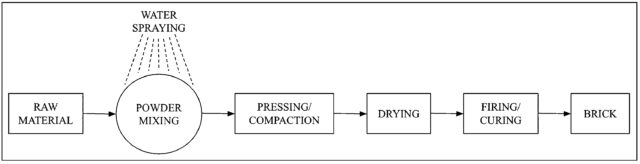
In the current American media landscape, the once sturdy and resolute peat bricks have become very weak and even muddy in some cases. As soon as the bricks are formed, a naysayer appears to interrupt the traditional process and spray these stories with the water that is conjecture or misplaced satirical reading. Firsthand experience is no longer the primary reference point, and a lot of people are scared. They need someone to organise and sift through what is now mostly muddy, unrefined material. The people look to tastemakers and gatekeepers for fear of being wrong, or of getting muddy tinkering around in their attempts at understanding all of the new jargon and its underlying meaning.
AI, cryptocurrency, brainrot, hopecore, clean girl aesthetic, gooning, mogging, big chungus, tradwife, angelicism, alpha male mindset, manosphere, woke news, infrastructure week.
These are the new words/jargon that corporations use to capitalise on users’ time when there is no new news, just new terms. The cloud of non-specificity is what connects all of these terms. There is no universal agreement on their meaning, and in this way the language becomes symbolic, muddy and sometimes complicated to navigate – like the bog. These ever-emergent touchpoints of internet/cultural vocabulary, and ones that exist on a similar plane (see ‘do not research’), are no longer deployed in an earnest attempt at understanding or demystifying the new and complex phenomena of our late capitalist and digitally reliant society. In our current (post-COVID/accelerated/telescoping crisis) context, these popular ‘internet’ buzzwords are produced, perfected and reworked for search engine optimisation (SEO). These terms lure in uninformed boomers and sheepish millennials in search of an elusive cultural awareness. They choose the WIRED article or New York Times Instagram infographic that feels like it covers the most territory in the fastest, simplest way (maybe they even dip into Buzzfeed or New York Post feeds for a quick fix of news slop). Audiences find themselves sifting through a pile of crumbling bricks in search of one that is made correctly, or at least with the traditional model in mind.
The result of this constant uninformed consumption is fatigue. People from all walks of life are tired of constantly making choices, or being given the illusion of choice from advertisers or middlemen. No matter how shiny and diverse the ‘choice’ buttons are, the underlying motive is the same: corporations want to resell our opinions as one straw in the hay bale that is a dataset. This is called surveillance capitalism.
Surveillance capitalism is a concept in political economics which denotes the widespread collection and commodification of personal data by corporations… As described by Shoshana Zuboff, [surveillance capitalism] is driven by a profit-making incentive, and arose as advertising companies, led by Google’s AdWords, saw the possibilities of using personal data to target consumers more precisely.[1]
As a result of this new and rapidly evolving surveillance capitalist landscape, users are stuck in a sort of push-pull between the DIY messiness of the ‘public access channel’ digital experience, and the hyper-sterile, paid-entry environments built by, say, Criterion or Disney. The choice for most users is obvious: why do the work of torrenting a film, or a piece of data, when I could pay Netflix or JStor to borrow it and thousands of other ‘curated’ titles? Why learn how to fix a problem with my custom website when I could spend a small amount of money outsourcing the task using TaskRabbit or Amazon’s mechanical turk, as even the smallest amounts of digital labour have been categorised and given a price tag? Why own anything, why build anything, why think of anything original? An ‘interesting’ human personality can now be compiled using pre-collected/approved trends and witty cultural references pulled from myriad ‘top lists’ from outlets like DAZED or The Cut.
Anyway – how does this connect to the bog, you might ask.
The answer is simple. Sometimes you can’t sift through the mud, or separate it or organise it. Sometimes you have to move past the ‘cleanliness is next to godliness’ thing to actually learn about any of the aforementioned ideas (AI, cryptocurrency, brainrot, hopecore, clean girl aesthetic, gooning, mogging, big chungus, tradwife, angelicism, alpha male mindset, manosphere, woke news, infrastructure week). They’re intersectional. There are pros and cons to each new theory or concept introduced – nothing is ever fixed on a binary. Learning to sift and understand for oneself will require a bit of work, and hopefully this writing offers some tools and insights to make the sifting easier.
IT SEEMS LIKE NOBODY WANTS TO WORK THESE DAYS…?
– Kim Kardashian[2]
02 – FOSSILS, O.G. BIOMETRIC TRUTH
When people of the future look back at all our Anthropocene fossils and try to make sense of why it all unfurled the way it did, there will be one central question: why rush? Why expedite the already inevitable pressures? Tribalism, death, birth, innocence, and flight or flight to name a few. Some of it is as simple as the snake eating its own tail, an image that seems nonsensical, but logical at the same time. It may sometimes feel we are caught in a loop of human self-destruction that is neverending, and only expedited by our technological advancements.
These pressures aren’t new, nor are they solved by technological advancement. They are constants – forces that persist across class, race, gender, and era – shaping what we produce, preserve and leave behind. They don’t disappear. They sediment. Over time, they harden into objects, systems and images that the future will read as fossils.
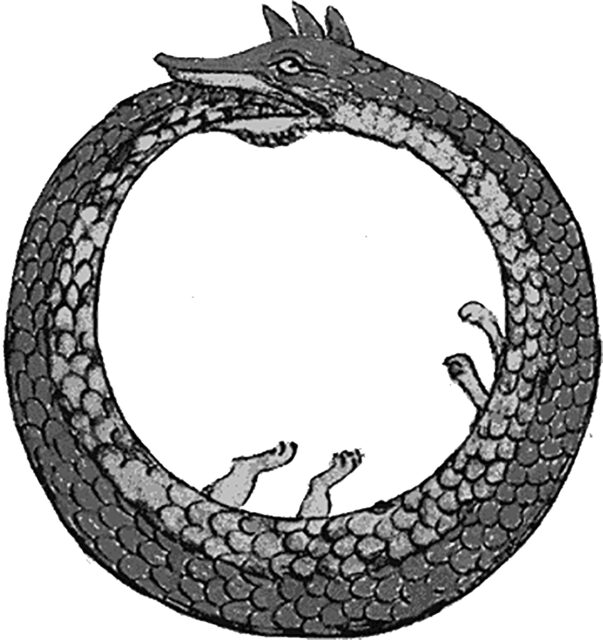
The construction of a landfill, viewed below the earth, closely resembles the naturally occurring peat bog. There must be a correlation between these two spaces. The similarities tell us that what we see, what we fear, and what we most aim to replicate and ‘perfect’ are not so different. Our landfills will be the fossils the future uses to understand us. Not just physical landfills but also technology and terabytes of its accompanying media.
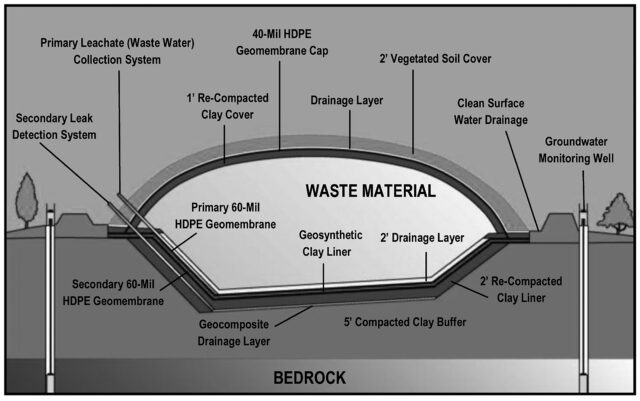
Fossils are the only evidence with which humans cannot tamper, in terms of the biological data present. Humans can lie, and jump to conclusions about what fossils mean or how they would be reconstructed, but fundamentally we rely on fossils for their accuracy and truth. The fossils made from our present era will include all kinds of objects, but at the heart of the Anthropocene fossil will be proof of a pseudo-religious addiction to plastic – seen in cell phones, Labubu dolls, the clapper, laptops, and ofc plastic bottles of all shapes and sizes. Essentially, all these objects are destined for a landfill.
The Anthropocene fossils that humanity is leaving behind will be the evidence of our consumptive habits, evidence of our disdain for material integrity, and – maybe most importantly – evidence of the collective shame we share around all of these uncomfortable truths. Consumers value transparency, and that may be the saddest part of the bog as metaphor: it is distinctly un-transparent. The future may look back and find these stark contradictions between the things we claim we want and the way we constantly replicate certain harmful phenomena or personas. Some examples of these are manifested, in contemporary parlance, by things like Hollywood tropes of the child star, the tortured genius and the abusive megalomaniac. For example, in the past we had child actors like Shirley Temple, who were really placed in public view for insidious reasons related to a collective obsession with youth and the female form. Fast forward to 2021 and you have Danielle Bergoli, the media personality and rapper also known as the ‘catch me outside’ girl, who in an interview revealed that she made millions from her first day as a model on the subscription-video platform OnlyFans.
“When we first started, I made a million dollars in six hours”, she shared. “And by the end of day it was like $4 million.”
This means that despite all of the digital spaces and experiences we have built to signify the advancements of our society, we are still highly informed by primal emotions and responses: tribalism, death, birth, innocence, and flight or flight, among others. Both the landfill and the bog can give us insights into the fact that our ‘innovations’ may be nothing more than a costume change or a resolution update, while the underlying ‘hardware’ and ‘software’ remain the same.


03 – CARTOONS, WHAT WAS CLEAN IS MUDDY 4EVER
Across cultures/languages/belief systems, we can all pretty much agree that ‘civilisation’ is characterised by a few special factors; these include, but are not limited to, the construction of structures/shelters/sanitation, organised agriculture, and, finally, the recording of events (oral history/written history/ drawn history). I want to focus specifically on the drawn history component. From Spain to Indonesia, visual record-making was one of the essential facets that unified many early cultures. These images, mostly cave drawings, were primarily made to remind a community, or small group of people, of certain pivotal events or common knowledge that, in some cases, could be life-saving. This information could be a warning about a specific pitfall found during the hunt, an acknowledgement of a significant geographic element, or a warning about a specific plant or edible insect. Most early cave paintings depicted large wildlife, renderings of the human hand, and the female form – all very important for early bipedal humans.
Fast forward a couple of thousand years, we still all use drawings/images/symbols as the primary reference point for ‘understanding’ many things. For many people, this starts in school with the six-sided wooden block, with a red A on top, an apple on one side, and the full word on another. Simple one-to one association as the best way to learn.
Alongside this very formal and organised educational understanding of images, children are also introduced to both static and moving cartoons. Widely circulated cartoons can, in many ways, be thought of as cave drawings that we all agree on because of their placement within a trusted media organisation, like a local newspaper or a national television network. Often their characters are known for their universality and simplicity: see Doraemon, Hello Kitty, the Minions, Popeye, or Sailor Moon. In cartoons, viewers are often offered variations on a simple theme. For example, Garfield is the disgruntled rescue cat with an attitude. His predecessor, Heathcliff, was the same but in an earlier, less globalised context. We understand Garfield as a singular and individual character, but also as an archetype of a grumpy pet. He hates Monday, despite being unemployed. He straddles the fence between being highly political, sort of a Marxist, and just a lazy cat.
Garfield is a great example of a bygone era of ‘disgruntled’ cartoon protagonists – Fred Flintstone (1960), George Jetson (1962), and Charlie Brown (1950) are prime examples. These characters are defined by their emergence during the mid-20th century. Flintstone and Jetson came from Hanna-Barbera Cartoons, Inc., and Charlie Brown from the funny pages of local newspapers. Each of these characters is a version of the white male identity. Fred was representative of a blue-collar, working-class ‘macho man’. His car was powered by his own effort, in the form of bare feet; his wife was taken care of, as evidenced by her pearls; and his meal was an impossibly large rack of dinosaur ribs. He was a mirror for the working man: his stupidity, his masculinity and his arrogance had basically no consequences. Occasionally, Flintstone would find himself in a situation-specific pickle that drove the episode forward. In the show, there was never a hard conversation about the dynamics of his marriage, or his lopsided relationship with his bff Barney Rubble – forget the sort of pre-societal conditions that must have confronted him as a ‘Neanderthal’. Fast forward several centuries, and we encounter George Jetson; for all of his upgrades, he is not much more progressive than Flintstone. Jetson is a man on the conveyor belt of life: happy, gainfully employed, routine-aided, and personally blame-free from the implications that come from a future in which all minorities have been erased or annexed. It is interesting that the show never touches on the fact of ‘total whiteness’ in its universe. Are we to assume that George Jetson is like a white supremacist who supported the eradication of all minorities? Either way, those are rabbit holes for another day. I make these points to illustrate the clarity that these shows had between their world and our world. They were separate, and that was very clear. The same can be said for Charlie Brown. No adults had a voice, and it did not matter who Charlie’s parents were. The show was certainly not about them or their ideas. It was pure, like a glass of water.

Cartoons today are a lot muddier – a sort of innovation of the 1990s that certainly started with Homer Simpson. Homer was the first man to mistakenly wobble off the conveyor belt that I mentioned above, and into a world more like ours. His wife and daughter are leagues smarter than he is, his son is the archetypal 1990s boy troublemaker, his boss is evil, and the only place he can find solace in his existence is at a bar, Moe’s. The Simpsons is a crazy thing to begin to unwrap in terms of its muddiness. Is Homer relatable? Is he the ‘average American’? Is his life a warning about the road we are moving down? Is he a lightning rod for the anger of the modern man? Maybe we will never know – that is not really the point of the show.
If we consider the television dads who appeared post-Homer, things only become more complicated. I think about Peter Griffin of Family Guy and the setbacks he builds for everyone around him. I think of the violence and chaos unleashed by the un-empathetic protagonist of Rick and Morty, Rick Sanchez. These characters are not built to be heroes. They are not even likeable. Unfortunately, they do feel accurate and real. People have many sides, the things we find entertaining have many sides, and no one is perfect – so why wallow in fantasy? Cartoons are reflections of real-life situations, and as a result, function as the ‘cave paintings’ of our day.
04 – FETISH, POP MY, POP MY…
The primary unit of human biology appears 99% of the time as the result of intercourse. The perversion of sex into something that ought to be hidden behind closed doors or behind a paywall is probably one of the most disturbing results of empire-building. Sex is like leaves on trees, all around us, as unaffected by our gaze as we are by its existence. Fortunately, I recently stumbled across the IRL bog-jumping fetish online, and a handful of things were clarified.
First, control is one of the most important parts of sex and relationships. Usually the focus is balance (50/50), or a semblance thereof (60/40) (70/30). In most two-person couples there is a dom and sub; this means one person has more control and one person has less, even if the margin is very slim. Rarely is there a situation where the dominant member has 100% control and the sub has 0%. That dynamic is not enticing because it removes the tension that comes as a result of an imbalance.
Second, the bog is sexy (worthy of reverence) because it is unpredictable and the user has to surrender their entire body to it. This dynamic is extreme and requires a specific level of knowledge and trust. I assume certain precautions are taken to assure the safety of each consenting participant. In the sea of manufactured choice, smart fetish lifers know that the real luxury is operating outside of the pleasure industrial complex.
Third, as we hurtle towards a future that eerily resembles the 2006 movie Idiocracy, it will be imperative to understand that there are alternatives to the systems that we are offered, or that seem like the defaults. Never underestimate the possibility of choice: opt out of surveillance when you have the chance, opt in with fabricated information when you feel like it. The only wrong answer is giving away your real (and often very important) personal data to third parties for free. That’s the 100% to 0% relationship – not sexy, remember.
Finally, there is fun in randomness and there is productivity that can yield from the unplanned and the non-objective path. I’m not going to jump too deep into this muddy logic, but you can read Why Greatness Cannot Be Planned: The Myth of the Objective by Kenneth O. Stanley and Joel Lehman.
05 – REFLECTION, ON MALCOLM GLADWELL’S ‘THINK!’ LOGIC
So I saw this crazy TikTok slideshow the other day that was about the differences between the minds of modern humans and those of prehistoric humans. Essentially this:
In January of 1977, Princeton University psychologist Julian Jaynes (1920–1997) put forth a bold new theory of the origin of consciousness and a previous mentality known as ‘the bicameral mind’ in the controversial but critically acclaimed book The Origin of Consciousness in the Breakdown of the Bicameral Mind.
Jaynes asserts that consciousness did not arise far back in human evolution, but is a learned process based on metaphorical language. Prior to the development of consciousness, Jaynes argues humans operated under a previous mentality he called the bicameral (‘two-chambered’) mind. In the place of an internal dialogue, bicameral people experienced auditory hallucinations directing their actions, similar to the command hallucinations experienced by many people who hear voices today. These hallucinations were interpreted as the voices of chiefs, rulers or the gods.
– The Julian Jaynes Society[3]
If we are to take Jaynes’s theory as the authoritative doctrine on the human mind, it tells us a few things about analogue and social media landscapes, and how we affect them and they affect us. Principal among these is that our brains continue to evolve in response to the cognitive threats, or the re-formatting of information, with which we are faced. For example, think about the massive influx of non-professional images that emerged as a result of the personal cellular device. This sea of images, in the minds of some, was a problem. It was a problem that the gatekeepers, often used to determine value, were no longer the only people with access to image-making tools. Like Y2K, the television, jazz, or any sort of unknown cultural event horizon, it caused widespread panic as to the ways these changes or movements would ripple through a ‘free’ society. For the most part, the trajectory of these moments of change have been the same: they’re popular and controversial, then they’re mainstream, then they’re absorbed into the dominant culture, and finally they become evidence of one truth or another. It is the same with a lot of the innovations we are currently witnessing that threaten to drastically alter the landscape of an industry.
So, why does it matter that our brains change? Because as the complexity and muddiness of our current techno-capitalist landscape expands, so will our ability to decipher authentic from inauthentic. Over the past ten years, many people have raised their level of image literacy, becoming able to decipher a ‘fake’ (AI- or computer-generated) image from a ‘real’ one taken by a human. Users do this in a variety of ways, some with entertainment as an entry point, others with a scepticism that drags them into rabbit holes of understanding. Suffice to say, this thing that was an imminent threat more than five years ago – image-generating AI – has been absorbed and understood as a separate lane of image-making. This absorption does not mean that we have completely harmonised our relationship with these new tools and the way they alter our media landscape. What I do think is important is that collective literacy has risen, albeit unevenly. An AI image does not fool the savvy viewer in the way that it might have in 2019. The answer to this technology is simple: get off your ass, work to understand the image.
Understanding images is not only about their composition. It can be very much about context, and it can be very much about the ability to recognise when an effect offered by a certain technology or hardware is real or being fabricated as an overlay. It is important to reflect on aspects that puzzle us or give us pause: the thing that makes us stop to take a second look at an image. However, just because an image feels important contextually or someone is telling you it is important does not mean it requires the same level of reflection as the thing your bicameral brain is drawn to.
06 – YOU MADE IT, NOW REPEAT
So, you’ve waded through – or skimmed through, or dived deep within and then resurfaced from, or dragged yourself across – a handful of prickly and at times incomplete thoughts, and ended up at ‘the end’. For some with more didactic expectations, this reading experience may have been a bit annoying; for digital thinkers, hopefully refreshing, maybe familiar. However, don’t call this a conclusion: you’re not finished with the document (as it is meant to be revisited).
The clearest truth I’ve arrived at is this: the elements of meaningful, era-defining media, literature, fashion, music, etc., endure because of their utility. I think specifically about HBO’s The Sopranos. In this ‘prestige television drama’, the premise, the characters and their motives are pretty linear and simple, at times stereotypical. It is full of narrow-minded, offensive characters, but the storytelling makes them, specifically Tony Soprano, relatable. Because Tony is relatable, we grow to empathise with him and see his logic. If the audience pays attention, they grow to understand the codes of conduct in ‘his line of work’ that bind him. So, instead of recoiling when Tony is driven to any of the extremes of human indecency, we commiserate with him; we understand that his situation is never completely black and white.

Our analysis happens somewhere inside of this grey space. It is not uniform. Some things Tony does will always be disqualifying; others we can let slide. Like Homer Simpson and Peter Griffin, Tony is complicated and he is muddy, and that’s exactly why the show is so satisfying. Audiences need to see themselves, and to be able to critique freely within a universe that feels akin to their own.
Meaning doesn’t come from cleanliness or certainty.
It comes from utility.
From friction.
From staying with the mess long enough to see what it does.
Jump into the bog.
‘Surveillance capitalism’. Wikipedia
The Kardashians season 2, episode 4: ‘We’re Built for This’. Fulwell 73 and Kardashian Jenner Productions, 2022
‘Overview of Julian Jaynes’s Theory of Consciousness and the Bicameral Mind’. Julian Jaynes Society blog