Future Art Ecosystems R&D Fellowship: Art x Convergence
Serpentine Arts Technologies launches the inaugural Future Art Ecosystems R&D Fellowship, a six-month programme supporting research and experimentation at the intersection of art and advanced technologies.
The Future Art Ecosystems Research and Development (FAE R&D) Fellowship is a low-residency programme designed to support practitioners working across art and advanced technologies, offering time for research, and collaboration.
The inaugural fellows for 2026–27 are Alice Bucknell, Reina Mun, Alfredo Salazar-Caro and Auriea Harvey.
The inaugural fellowship is organised around the theme Art x Convergence. The theme serves as both a prompt and a provocation, inviting fellows to explore how AI is reshaping cultural, social and technological systems. It responds to a moment in which AI systems can pursue goals, model environments and act in the world, raising questions about embodiment, robotics, governance, legal frameworks, markets and planetary organisation.
Each fellow will pursue a research question connected to their practice or a project in development. Fellows will develop their research through tailored mentorship, peer exchange and professional development, with opportunities to share their work publicly as it develops.
About Future Art Ecosystems
Future Art Ecosystems (FAE) was created to support organisational innovation in the arts, specifically around ecosystem design for art and advanced technologies (AxAT). While critical discussions on technologies like AI, blockchain, and immersive media are well established, attention to the operational and infrastructural conditions that enable AxAT practices has been limited.
Since 2019, FAE has brought together artists, technologists, cultural institutions, and civic actors committed to building systems that drive creative and organisational innovation.
Future Art Ecosystems initiated by Victoria Ivanova; led by Tommie Introna, Tsige Tafesse, and Kay Watson
About Arts Technologies
Serpentine Arts Technologies programme explores the impact of technology through art, research and experimental projects. It supports artists to produce projects that use advanced technologies and convenes people working in art, technology, law, policy, and academia to share knowledge and develop new ideas about technology and society.
Fellows
“What happens to the figure when it exists in a permanent state of becoming: moving through AI systems and digital craft, transmitted across borders as a file, resolved into physical or digital or hybrid form depending on context, material, and the conditions of each place it arrives? The figure I author in Rome travels as a file. What it becomes depends on where it arrives and what exists there. It might remain digital, or be fabricated only where exhibited. The figure is never fixed. It is always in transit. Always, somewhere, becoming.”
Auriea Harvey (b. 1971, Indianapolis; lives and works in Rome) is a pioneering digital artist and sculptor, with a thirty-year practice spanning net.art, video games, and physical fabrication. Working at the meeting point of sculptural traditions and computational pipelines, she treats the polygon mesh as material, moving figures across materialities, in dialogue with civilisation. She has shown at arebyte London, HEK Basel, and the Museum of the Moving Image, NYC.
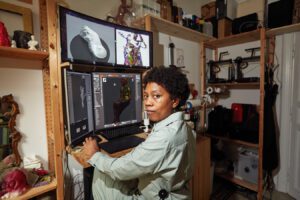
“My research explores how emerging technologies and ancestral knowledge systems can converge to create post-digital architectures that reimagine dwelling, ecological stewardship, and regenerative futures. Through computational design, XR, and robotic earth construction, I investigate how Indigenous knowledge and vernacular building traditions can inform hybrid physical–virtual environments that function as spaces for artistic experimentation, cultural continuity, and regenerative worldbuilding.”
Alfredo Salazar-Caro is a creator and worldbuilder living and working between Mexico City, New York, and online. His practice spans installation, XR, social sculpture, and biocompatible architecture. He is the co-creator and Creative Director of DiMoDA (The Digital Museum of Digital Art), a pioneering VR institution founded in 2015. His work has been exhibited at the Tribeca Film Festival, the Whitney Museum, and Pérez Art Museum Miami, and featured in The New York Times and Leonardo.
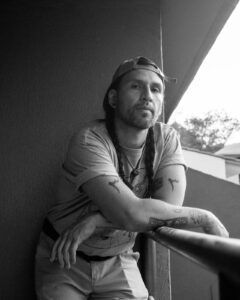
“Medium Sized World is a research project investigating the technological, epistemic and ecological parameters of world models (WMs): AI systems that simulate an internal world and predict its future variables, with applications ranging from robotics training to long-range climate forecasting to video games. WMs are also relational technologies that reveal how we sense and shape the world; what the model represents, glitches, and omits reveals an embedded value system and emergent cultural ideology surrounding spatial intelligence. Medium Sized World looks under the hood of commercially available WMs through trusted tester beta access. It merges these findings with science and technology studies and applied philosophies of AI in search of an alternative framework for world simulation: one that is collaborative, multiscalar and open-ended. The results of this investigation will shape a new multiplayer video game that Bucknell is developing for late 2027.”
Alice Bucknell is an artist, writer and educator based in Los Angeles. Their work explores the affective dimensions of video games as interfaces for understanding complex systems, relationships and forms of knowledge. Centre Pompidou (Paris), Canyon (New York), Biennale Gherdëina (Italy), the V&A Museum (London), Counterpublic Triennial (United States), and the National Taiwan Museum of Fine Art.
Bucknell is currently a Visiting Professor at UC Davis.
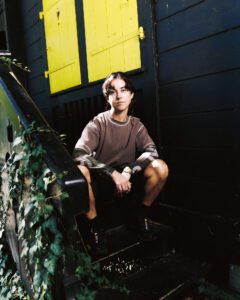
“Generative and agentic AI arrive with a claim of enhancement, that they extend what people can do and who they can be. Controlled trials already point in opposite directions. Perceived and measured gains diverge, and the long-run effects on people remain largely unmeasured even as adoption races on. My inquiry treats that claim as the question. What does enhancement mean, and on whose terms? How can support for well-being, creativity, and productivity be rethought, created, and evaluated with humans in the loop?”
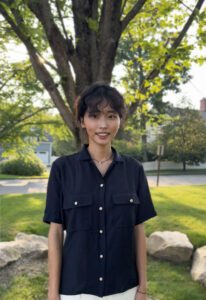
Reina Mun is a doctoral researcher at Harvard. Her research focuses on multimodal closed-loop control for ambient intelligence systems. She is currently applying this approach to health and well-being applications in everyday settings. Broadly, she is interested in extending these methods to emerging platforms and how people understand, direct, and come to rely on such systems. She has previously worked at Microsoft and Mass General Hospital.
More Information
The term convergence is used here in a specific and expansive sense — not simply the coming together of previously separate fields, but something more structurally transformative: the conditions under which distinct systems, once held apart by technical, legal, philosophical, or material boundaries, begin to interpenetrate to the point where their original separateness becomes difficult to assert.
Convergence, in this sense, is less a destination than a process of mutual re-constitution.
The emergence of agentic AI systems — systems that pursue goals, model environments, and act in the world across extended time horizons — has accelerated this process across multiple domains. These systems do not simply automate tasks within existing structures; they bring into contact fields that previously developed according to their own distinct logics. The question is no longer how AI enters a given domain, but how each domain is changed by its entanglement with AI — and how that entanglement changes AI in turn.
But convergence can also be understood in a different register: as the tendency of objective-driven processes to narrow toward a predetermined goal. In this sense, convergent processes can foreclose discovery, pushing search toward dead ends rather than opening up new complexity.
Art often functions as an engine of divergence. Rather than optimising toward predetermined outcomes, art branches and intentionally moves through instability to open up new directions. This makes art and creative R&D particularly well-positioned to navigate and constructively complicate the convergent zones this FAE Fellowship maps.
For artists working in this moment, convergence names both the condition of practice and the object of inquiry. The FAE Fellowship invites work that engages convergence not as metaphor but as an active site: where categories are genuinely unstable, where disciplinary tools prove insufficient, and where the artistic imagination may trace what more bounded forms of analysis cannot yet reach.
These zones may include:
- Bodies and machines — what it means to sense, move, and feel in a world where AI increasingly acts through physical form
- The real and the simulated — as agents are trained in virtual environments and deployed in material ones, what counts as experience, and who gets to define it
- Ownership, authorship, accountability — when AI systems create, act, and cause harm, existing frameworks of rights and responsibility are breaking down
- Living with entanglement — human and machine agency are already deeply co-implicated; the question is what new ways of thinking, making, and being together this demands
- Planetary stakes — from climate modelling to resource governance, AI is reshaping how the planet is managed, and who has a say
These are not fixed categories or a definitive list. They are prompts for inquiry — openings through which applicants might approach the conditions, contradictions, and possibilities of this moment through their own practice.
What the FAE Fellowship Supports
The FAE Fellowship supports creative R&D rather than finished outcomes with the expectation that you will document your process and are committed to sharing it with the public.
The FAE Fellowship is intended as a space for:
- Developing or refining a research question
- Advancing a project already in development
- Testing methods, materials, references, or approaches
- Working through conceptual, technical, social, legal, or philosophical questions within practice
- Receiving critical feedback and contextual support
- Building relationships across art, technology, and adjacent fields
- Sharing research in process through dialogue with peers, mentors, and invited contributors
The emphasis is on process, experimentation, and shared learning. Rather than requiring a polished final outcome, the FAE Fellowship creates the conditions for work to be developed, challenged, and deepened over time.
Who is this Fellowship for?
The FAE Fellowship is for individuals and collectives working at the intersection of art and advanced technologies.
We welcome applications from practitioners whose work may span art, technology, curating, producing, organising, research, writing, or other interdisciplinary approaches. You do not need to fit a single category or discipline in order to apply.
What kind of work or practice is the FAE Fellowship looking for?
The FAE Fellowship is designed to support creative R&D. This could include a research question, a project in development, a new line of inquiry, or a practice-based investigation that responds to the theme Art x Convergence.
We are interested in proposals that are exploratory, critical, and process-led. Applicants do not need to present a finished project or a fully resolved outcome. The fellows will be asked to document the process and be committed to sharing it with the public.
What does ‘Art x Convergence’ mean in the context of the FAE Fellowship?
For this Fellowship, convergence refers to the ways previously separate systems — technical, legal, social, ecological, philosophical, and institutional — are becoming increasingly entangled.
We invite applicants to respond to this theme through their own practice and research. This might involve questions around AI, embodiment, robotics, simulation, governance, rights, infrastructure, ecology, agency, or other related areas. These are prompts rather than limits.
Can collectives apply?
Yes. Collectives are welcome to apply.
If applying as a collective, the application should clearly explain how the collective works together, what research or project is being proposed, and how the Fellowship support would be used across the group. The collective will be asked to nominate their lead participant who will represent the collective in the FAE Fellowship.
Can international applicants apply?
Yes. International applicants are welcome.
However, all fellows must be able to attend the three in-person weekend gatherings in London that form part of the programme. Travel and accommodation support will be provided for those in-person weekends.
How are the fellows selected?
There are two selection rounds. In the first selection round, the Serpentine Arts Tech team will shortlist ten candidates, scheduling interviews in June. The second selection round will involve an external jury.
When does the FAE Fellowship take place?
The Fellowship runs from September 2026 to March 2027.
It is structured as a low-residency hybrid programme, combining online activity with three in-person weekend gatherings in London.
What is the time commitment?
The Fellowship is designed to be low-residency, but it does require regular engagement across the programme period.
This includes:
- Three in-person weekend gatherings in London
- Regular online cohort sessions
- Weekly sessions with advisors and specialist workshops
- Monthly one-to-one mentor meetings
- Occasional check-ins with the Serpentine Arts Tech team
- Time for independent research and development between sessions
The weekly online participation is around 3.5 hours. Additional time should go towards independent work. Applicants should consider whether they can commit to the overall rhythm of the programme across the full Fellowship period.
What support do fellows receive?
Selected fellows will receive:
- a £10,000 fellowship award
- travel and accommodation support for the London weekends
- one-to-one mentorship
- access to specialist workshops, seminars, and advisors
- peer learning and cohort exchange
- support from the FAE / Arts Technologies team around programme coordination, logistics, and access
The FAE Fellowship is designed to offer both shared structure and tailored support.
Is the FAE Fellowship focused on finished outcomes?
No. The Fellowship is focused on research and development, not on delivering a final artwork or polished end product.
We are interested in process, experimentation, and inquiry. Fellows will be asked to document and share work-in-progress publicly but the emphasis is on the development of ideas rather than final production.
Do I need to have a fully developed proposal before applying?
No. You should have a clear area of interest, research question, or project direction, but your proposal does not need to be fully resolved.
The FAE Fellowship is intended to support work that is still forming and may evolve through dialogue, mentorship, and experimentation.
What kinds of proposals are eligible?
There is no single required format.
Proposals might be practice-based, research-led, collaborative, speculative, technical, conceptual, organisational, or interdisciplinary. What matters most is that the proposal has a strong connection to the FAE Fellowship theme and that the applicant can articulate why this programme would be meaningful for the development of their work.
Will there be public-facing elements?
Yes. The Fellowship includes opportunities for public-facing process sharing.
This may take different forms across the programme and is intended to support visibility, exchange, and dialogue around the fellows’ research. Public-facing elements will be shaped in ways that are appropriate to process-led work, rather than requiring finished presentations in a conventional sense.
What does the mentorship structure look like?
Fellows will receive a combination of shared and bespoke support throughout the programme.
This includes:
- a Lead Mentor for one-to-one support across the Fellowship
- access to specialist contributors through workshops or seminars
- fellow-specific advisors where useful
- ongoing exchange within the cohort
Support will be shaped in relation to the fellow’s research question, practice, development goals, and needs.
How are mentors and advisors matched?
Mentorship and support are matched through the application, selection, and early intake process.
The aim is to build support around the work itself — including the fellow’s research question, methodology, and development needs — rather than applying a one-size-fits-all model.
Is the FAE Fellowship suitable for people at an early stage in their practice?
Yes. The Fellowship is intended to support the next generation of practitioners shaping this field, and we welcome applications from people at different stages of practice, particularly those developing new research directions or building an emerging body of work.
What matters most is the strength of the inquiry and the relevance of the FAE Fellowship to the applicant’s development.
Do I need to be based in the UK?
No. Applicants do not need to be based in the UK.
However, fellows must be able to attend the in-person London weekends and participate in the online elements of the programme across the FAE Fellowship period.
Will access needs be supported?
The FAE Fellowship aims to support access and participation across the programme.
Applicants will be able to share relevant access requirements, and selected fellows will be supported in conversation with the team to help ensure they can participate as fully as possible.
If you want this to be more concrete, you could add a short line in the application materials about how access information will be handled.
What happens during the in-person weekends?
The three in-person gatherings in London form key moments in the programme.
These weekends are expected to include a mix of:
- cohort-building
- workshops and discussions
- in-process sharings
- critique and feedback
- ecosystem conversations
- public or semi-public moments
- reflection and synthesis
Each weekend will have a different emphasis across the FAE Fellowship: kickoff, midpoint development, and closing/public sharing.
What happens between the in-person weekends?
Between the London gatherings, the FAE Fellowship continues online.
This is likely to include:
- cohort check-ins
- mentor meetings
- practical check-ins with the team
- specialist sessions
- quiet periods for independent research and development
The online structure is designed to maintain continuity while leaving fellows time to work within their own contexts.
What makes a strong application?
A strong application will usually:
- Clearly describe the applicant’s practice and context
- Articulate a compelling research question, concern, or line of inquiry
- Explain how the proposed work connects to Art x Convergence
- Show why this Fellowship is the right context for that development
- Identify what kinds of support, dialogue, or conditions would be useful
The application does not need to present a finished plan. Clarity of inquiry is more important than polish.
Will applicants need to produce documentation?
The FAE Fellowship includes a light documentation and reflection component, but it is not intended to be burdensome.
Documentation may be used to support process sharing, reflection, and the wider life of the FAE Fellowship. Any expectations around this should be made clear to selected fellows at the start of the programme.
Is there a required final output?
No single final output is required.
The FAE Fellowship culminates in a closing phase that may include public-facing research sharing, reflection, or documentation, but this is intended to remain responsive to the nature of each fellow’s process and practice.
Who is behind the Fellowship?
The Fellowship is part of Future Art Ecosystems (FAE) and is developed in relation to Serpentine’s Arts Technologies programme.
It sits within a wider commitment to supporting artistic and organisational innovation around art and advanced technologies.
Credits
Refik Anadol, Artist
Cao Fei, Artist
Holly Herndon, Artist
Lila Ibrahim, Chief AI Readiness Officer, Google DeepMind
Mariana Mazzucato, Author and Economist
Venkatesh Rao, Writer and Consultant
Suneil Setiya, Glass Castle
Evan Spiegel, Co-Founder and CEO Snap Inc
Natsai Audrey Chieza
Keri Elmsly
Winnie Soon
Terence Broad
Eyebeam
Gray Area
NEW INC (New Museum)
& more to be announced
We are grateful to an extensive network of advisors across cultural, legal and technical domains for supporting the programme.
Alasdair Milne
Alasdair Taylor
Alex Boyes
Alex Declino
Alexander Whitley
Alice Scope
American Artist
Aslak Aamot Helm
Bogna Konior
Botao “Amber” Hu
Ceci Moss
Christiane Paul
Christina Lu
Cullen Miller
Daniel van Strien
Delta_Ark
Eleanor Whitley
Fang-Jui “Fang-Raye” Chang
Gary Zhexi Zhang
Hannah Andrews
Hannah Redler-Hawes
Ian Cheng
Itha O’Neill
Iris Long
Ivaylo Getov
Jack Self
Jennifer Ding
Julia Greenway
Kameelah Janan Rasheed
Kate Hollenbach
Lauren Lee McCarthy
Lucia Pietroiusti
Luba Elliott
Mat Dryhurst
Matt Prewitt
Melanie Hoff
Mercedes Bunz
Mindy Seu
Morehshin Allahyari
Murad Khan
Natalie Kane
Neta Bomani
Nick Houde
Nontsikelelo Mutiti
Oguzhan Yayla
Primavera De Filippi
Rival Strategy
Romi Morrison
Ruth Catlow
Sam Lavigne
Scott Moore
Severin Matusek
Stephanie Dinkins
Stephen Bennett
Tega Brain
Trina Reynolds-Tyler
Veronica So
Vincent Moulinet
William Morgan
Xin Xin
Yancey Strickler